When Empire Technologies first came to us, they wanted a new website, but we saw an opportunity to do more by helping them get found by the right businesses on Google search for the services they deliver.
In this case study, we show you the SEO strategy that helped Empire Technologies appear number one on search engines for targeted keywords, and how we built a website that can keep growing to expand their search presence without big budgets.
Why marketing for B2B needs a different mindset
Cyber security is a tough category to win in search marketing. The organisations ranking for those keywords are often well-established or official government resources, which makes it hard for smaller businesses to compete.

Screenshot: Homepage of Empire Technologies website
Empire Technologies also sits in a service category where buyers do a lot of research before they enquire. They’re trying to educate themselves on what they need and make sure they’re choosing someone credible before they invest time and money. As a result, generating enquiries requires showing up across the full research funnel.
How B2B SEO differs from local SEO
SEO for retail and B2C services tends to reward proximity. In our website work for tradies in partnership with Aus Tradie Websites, for example, we’ve found that locality is a dominant signal for ranking high on search engines because people are usually looking for someone nearby who can show up quickly and has local relevance.
If you want a breakdown of how that works (and how to structure a local service business to win those searches), you can read more in our case study of an electrician based on Sydney’s Northern Beaches.
In B2B services, on the other hand, geography is often a secondary factor. Businesses are willing to work with providers in another city or state, as long as the provider can give decision-makers confidence they’ll deliver outcomes. That means you’re competing less on postcode and more on expertise. That shift changes the SEO playbook from location-based to building topical authority through service and problem-focused content.
Finding the keyword opportunities that others overlook
When we looked at the market data and search behaviour around cyber security and IT related keywords, we saw a clear opportunity: informational keywords with the potential to convert learners into customers. They may not be ready to buy today, but they are moving closer to purchasing intent.
The strategy we implemented was to meet that early intent with educational content, then guide readers towards the next step with helpful links and service context.
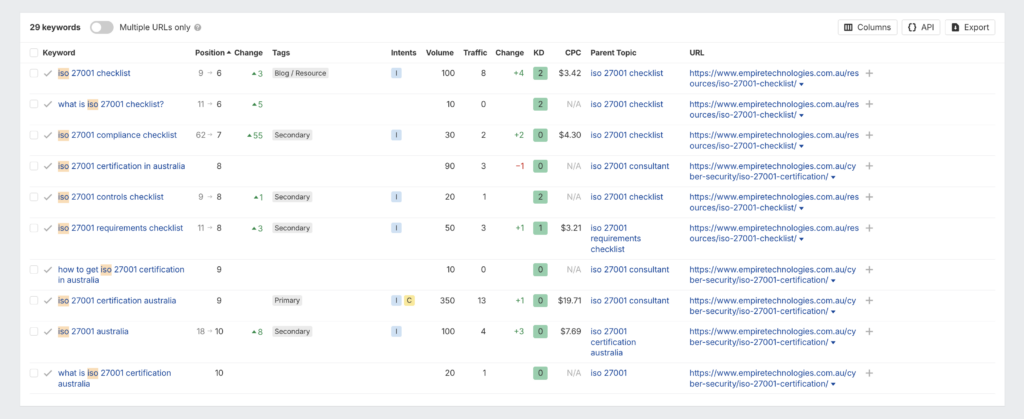
Screenshot: Keywords related to ISO 27001 that Empire Technologies is ranking on the first page of Google for.
After carrying out the strategy over the last six months, we found it generated a substantial amount of highly relevant traffic, attracting readers who were a strong match for Empire Technologies’ services.
Example: ISO 27001 services
Empire Technologies’ ISO 27001 services are a good example of a keyword theme that shows up across the entire funnel. People search for it either to learn more, or because it’s become a requirement for their organisation or a tender.
Based on this, we conceptualised plan around two key goals:
- Create dedicated pages on the Empire Technologies website that explain and answer common questions on ISO 27001 in plain language.
- Make it easy for people to take a low-friction next step when they’re looking for guidance on ISO 27001 certification, such as getting in touch for a free consultation.
Building pages that support the customer experience
Once we created the funnel, we needed the website experience to match. In cyber security, pushing a hard sale too early can backfire. Prospects usually want to feel understood before they feel sold to. To support that, we focused on soft conversion points that made it easy for someone to go from researching to reaching out.
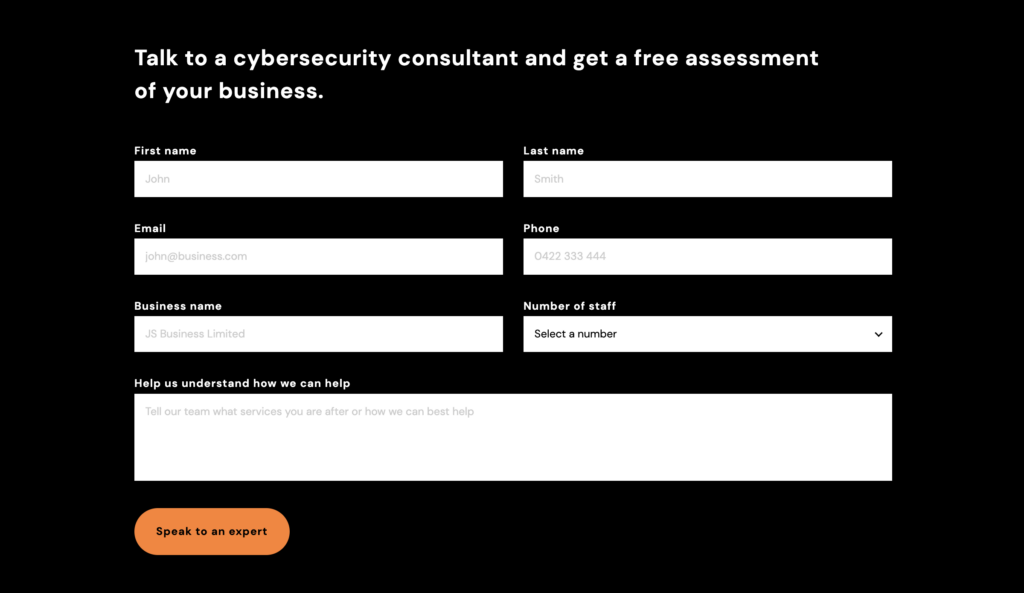
Screenshot: Example enquiry form for converting traffic to leads on the Empire Technologies website
Example CTAs we used in the website:
- Book a free consultation.
- Speak to an expert.
- Request a quick assessment.
- Ask us a question about compliance.
This copy is designed to encourage someone to get in touch or make an enquiry, without it feeling like they’re making any kind of commitment.
A website and performance-based model, built on shared accountability
One of the ways we supported Empire Technologies was through a performance-based marketing model. In simple terms: if we didn’t achieve results, we weren’t paid. It’s a similar approach to what we’re trialing with other businesses, because it supports a more collaborative way of working and makes SEO achievable for small teams.
Here’s what it looked like in practice.
Our role in the process as website designers
-
Website structure and page strategy: We designed and built the website around how B2B prospects search, with a content framework so every page could align to specific keywords and the wider marketing strategy.
-
Technical foundations: We set the foundations so the website is performant, crawlable and built in line with Google’s expectations, making it easier to rank over time.
-
Ongoing guidance and analysis: We gave the Empire Technologies team clear direction on what to prioritise and how it supports SEO, so they could focus their time on the efforts most likely to drive qualified enquiries.
What Empire Technologies committed to doing
For this model to work, the internal team needed to play an active role. Cristiano Pires, the founder of Empire Technologies, brought real commitment to the process. Alongside regularly publishing content on the website, his team also produce content for social media to extend reach, reinforce credibility and support the broader SEO strategy.
This collaborative approach matters because small businesses often don’t have the budget for ongoing retainers to external parties, which can cost upwards of $6,000 per month, so the strategy needs to be practical and feasible to sustain.
How social content supports rankings and AI citations
Empire Technologies’ content hasn’t just helped with traditional visibility and search engine ranking. It’s also supporting a newer layer of discovery: AI-driven results. We’re already seeing AI Overviews appear more often in Google for many categories, and it’s reasonable to expect that trend to continue.
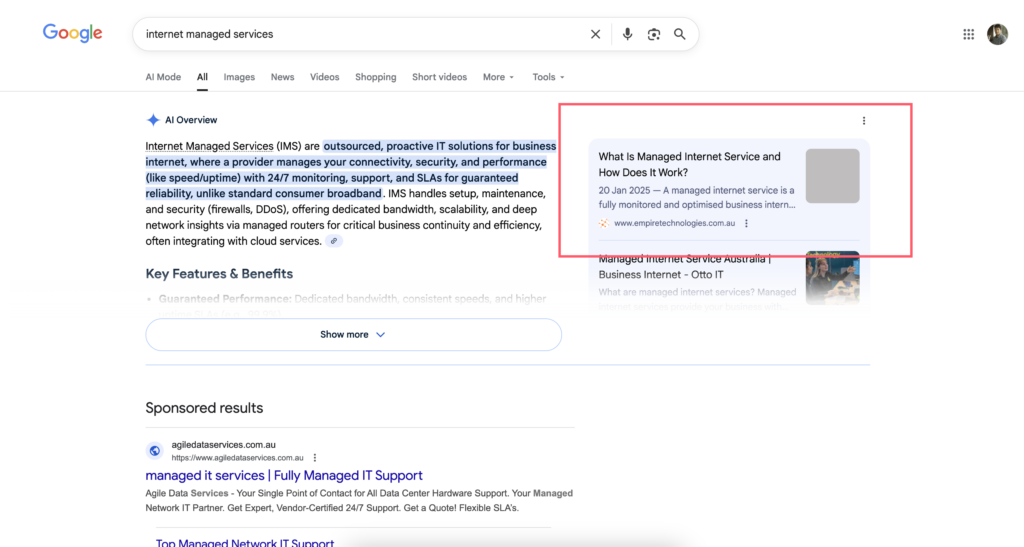
Screenshot: Google’s AI Overview now appears above sponsored results, but ranking informational content can still position your brand above the fold in search results.
Every time the Empire Technologies team publishes content on the website and shares it across social channels, it creates repeated, consistent signals about what the company does, who they help and the expertise they bring. That consistency matters for search engines and AI systems that generate answers, summaries and recommendations.
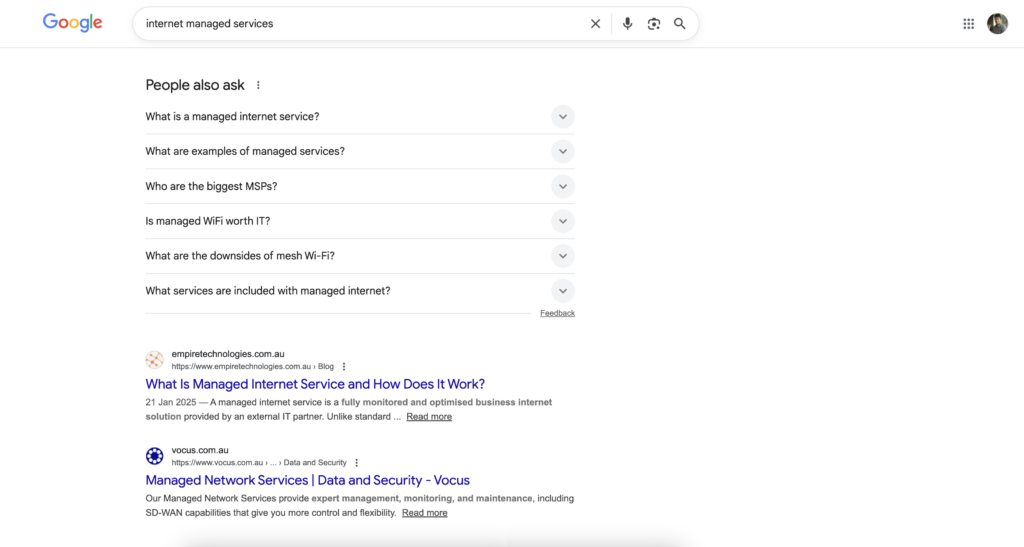
Screenshot: The same search term shows Empire Technologies’ website as #1, but due to Sponsored Results and PAA appearing first, it’s much lower down the page.
How we track AI citations and ranking progress
We use tools like Ahrefs to monitor ranking improvements, visibility changes and the estimated value of the traffic that a website is earning. That combination gives a practical view of impact, even when the customer purchase cycle is longer and conversions are less immediate than a local service business.
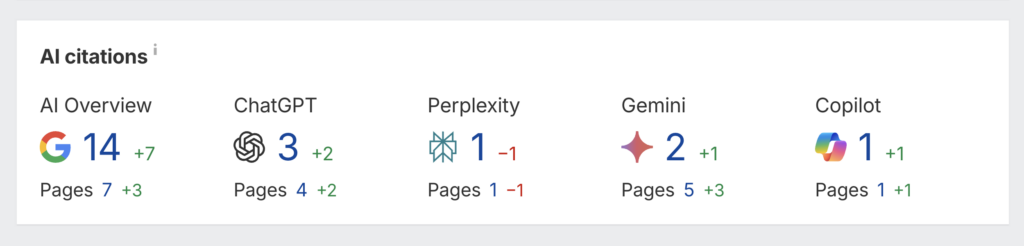
Screenshot: Data on Empire Technologies AI citations across platforms as per Ahrefs.
The results: growing keyword coverage and an estimated $2,100 per month in value
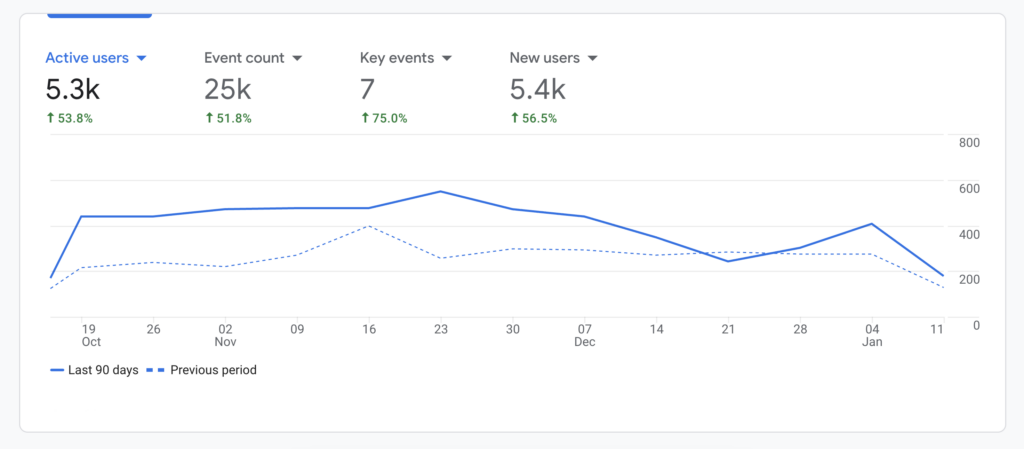
The Empire Technologies website is now ranking across a broad set of keywords on Google and Bing. This, in turn, generates leads on a regular basis, delivered straight to the sales team’s inbox.
Based on current estimates, the organic traffic value is estimated to be $2,100 per month. Put another way, if you had to buy those positions through ad spend, you could be investing more than $25,000 per year to achieve a similar level of presence.
For a small business, those savings are significant. It means any website can become a long-term acquisition channel that keeps working without needing a constant pay-per-click budget behind it.
What this approach means for other small businesses
Empire Technologies’ result came from getting the fundamentals right. It shows what’s possible when a business pairs a content strategy with a professional website. You don’t need to be the biggest player to compete, but you do need a plan.
For most B2B small businesses, that means selecting one or two service themes, then publishing content around them on your website and social media profiles so Google and other platforms can see clear, repeated signals about your expertise. Over time, that stack of content becomes a compounding asset – the more you add, the more surface area you earn in search and the easier it becomes to generate traffic that turns into enquiries.
The website and marketing framework we’d recommend
- Start by building a professional website around your audience – who they are, what they’re trying to solve and how they prefer to learn, compare and take action.
- Identify informational keywords by mapping the questions people ask early (when they’re still learning) through to the terms they search later (when they’re closer to choosing a provider), so your content supports the full user journey.
- Use low-friction CTAs that match intent, giving readers a practical next step such as asking a question, getting a quick assessment or speaking to someone, rather than forcing a “book now” decision too early.
- Build an internal rhythm for making content that’s realistic. We cover some of our favourite AI-supported workflows for ongoing website support in this guide to help you plan and create faster.
For any small business interested in marketing the approach has to be sustainable. With the right website foundations, small teams can compete in tough markets without spending thousands per month on an external agency.